


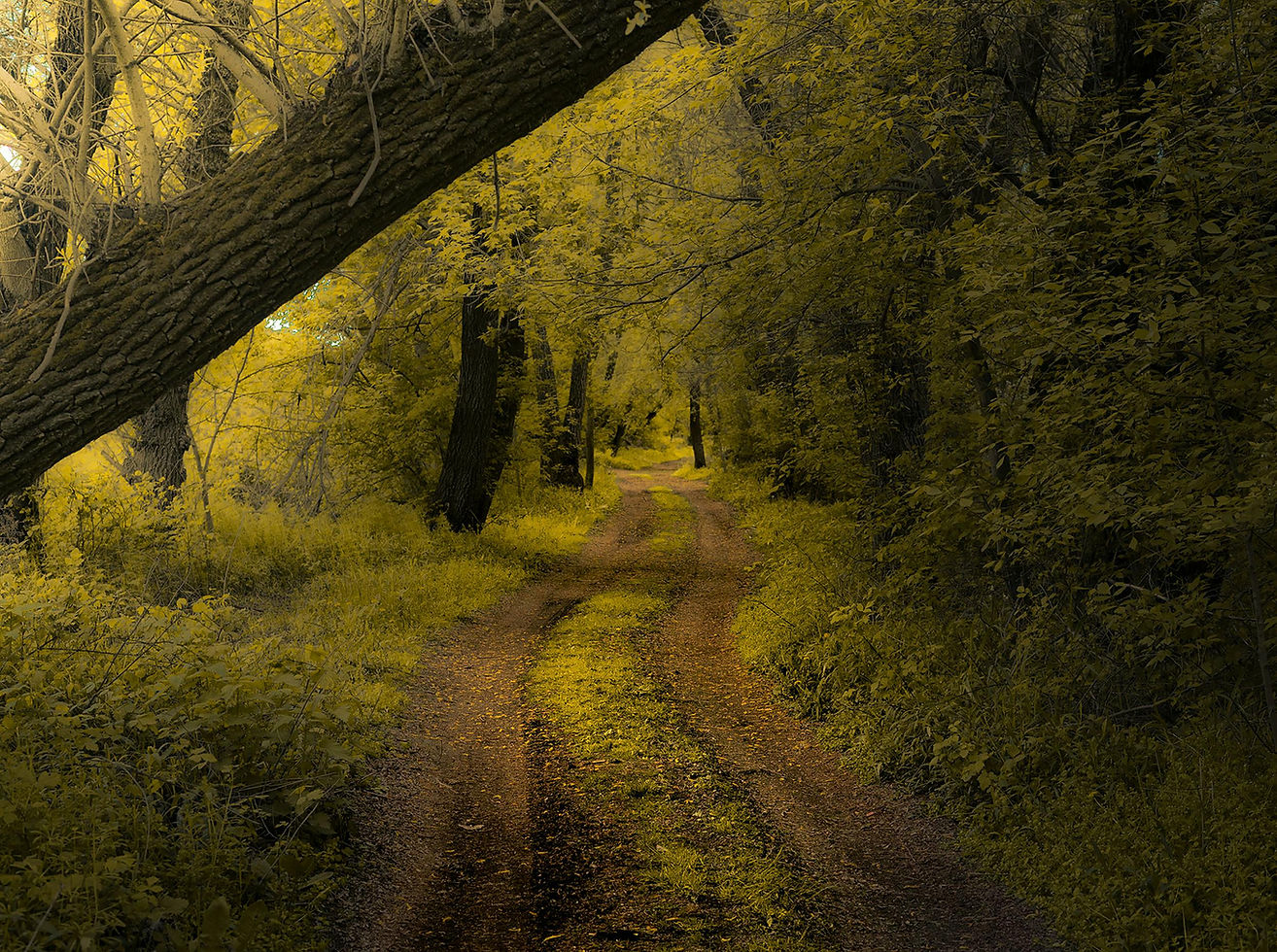
Seeing beauty (a different perspective)
Updated: May 10
I was about 18 years old when I went for a walk with my boyfriend in a small park in Switzerland.
It was spring, and most of the trees were in full bloom.
As we walked down a narrow path, there was a small thorny tree off to the side. It had no leaves—just a few buds. Its branches were uneven, with little knobs that made it look almost diseased.
Most people would probably walk past it and not think twice.
But I loved it.
There was something about the way its branches curved around the path, almost like it was framing what was ahead. It felt a bit mysterious. Different. Interesting in a way the other trees weren’t.
My boyfriend looked at me and said,
“You know why I like you so much? You have the ability to see beauty where no one else can.”
That stayed with me.
Over time, I’ve realized this doesn’t just apply to nature.
It shows up in how we see people.
How we see situations.
And especially how we see ourselves.
We’re often quick to label things:
good or bad
right or wrong
perfect or not good enough
It’s automatic. The mind likes categories—it makes things easier to process.
But those quick labels can also make us miss what’s actually there.
I’ve noticed that when something feels uncomfortable or doesn’t make sense right away, the instinct is to react or judge it quickly.
Instead, try something simple:
Pause.
Take a step back before deciding what something means.
You don’t have to agree with everything.
You don’t have to like everything.
But giving yourself a moment to observe—without immediately labeling—can shift how you see it.
This is especially true when it comes to people.
Everyone is carrying something you can’t see right away.
Everyone is responding from their own experiences.
Acknowledging that doesn’t mean you accept poor behavior or ignore your boundaries.
It just means you’re seeing more than what’s on the surface.
The same goes for ourselves.
We can be very quick to judge our own reactions, emotions, or past experiences.
But not everything needs to be fixed immediately.
Not everything needs to be labeled as a problem.
Sometimes, it just needs to be understood.
When we stop trying to force everything into categories—right or wrong, good or bad, perfect or less than—we begin to notice something else entirely.
Perspective.
And sometimes… even beauty.
And that, in itself, is beautiful.
Not everything needs to be judged right away. Sometimes, just taking a moment to observe is enough to see something differently.
If something in this post resonated with you, feel free to leave a heart, comment, or review. Your support helps independent writers and allows these stories to reach others who may need them. Thank you for being here.


Comments